The Growing Clash Between Modern Digital Infrastructure and Local Resources
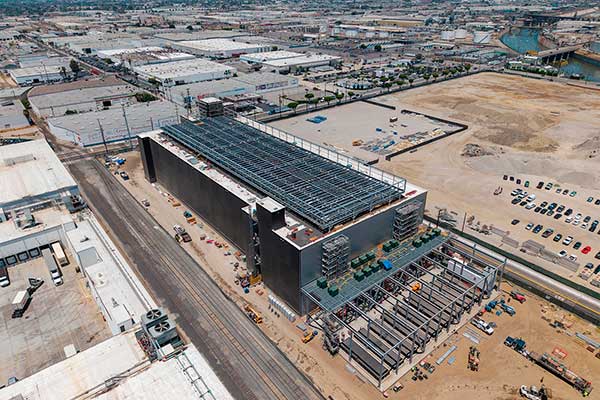
The rapid expansion of artificial intelligence data centers is triggering an intense public and political backlash across the United States, as communities confront the massive noise, land use, and escalating energy and water resource demands highlighted by ECE Professors Josep Jornet and David Kaeli.
This article originally appeared on Northeastern Global News. It was published by Rich McKay. Main photo: Northeastern experts say the backlash against AI-powering data centers are mounting. Seen here, data center construction. Photo by Weston Hancock / SOPA Images/Sipa USA via AP Images
Explosion of data centers is fueling a political backlash even as economy depends on them
The backlash against AI-powering data centers is just get started, experts say.
A text message hits your phone reminding you it’s your mom’s birthday. You log into your bank’s mobile app to see if you have enough cash to buy her flowers. Once that’s done, you rely on your phone to give real-time data so you can avoid traffic jams, because you’re already late for the party.
All that technology works faster and better because of the boom in data centers, which power artificial intelligence programs that make cell phones faster, allow online banking and even real time weather updates. More than 4,500 centers were built in the U.S., most since the 2000s, with a 70 percent jump since 2023 U.S. and another 1,500 new data centers in various stages of development, according to the non-profit Pew Research Center.
As much as the support from these data centers powers our lives and, in many ways, makes them more efficient, they are also becoming a flashpoint for public discontent in the U.S. The backlash stems from fears over potentially rising utility bills, noise pollution, and unsightly warehouses constructed near homes. The outcry has become so intense that politicians are starting to respond to the proliferation of grassroots organizations that oppose the centers, including through moratoriums on building these facilities.
Though AI may be here to stay, the furor over these centers is also likely to remain Northeastern experts say.
“There are, at a minimum of 500, some say 800, organized groups in America against building new centers,” said Daniel Aldrich, a Northeastern University Professor at the College of Social Sciences and Humanities, “Politicians are scrambling to catch up.”
A recent Gallup poll shows that Americans across the political spectrum are opposed to data centers. Seven in 10 people say they don’t want these facilities constructed near them. Most of the 1,000 people who took part in the survey released in May expressed concerns about the projects operating in secret, and consuming too much land, water and electricity, the poll said.
In a first of its kind move, earlier this month, New York Governor Kathy Hochul, a Democrat, put a one-year moratorium on all new construction of data centers in the state and she has since said that she is considering ending tax incentives for such facilities.
As many as 15 states, including Maine, are considering following moratoriums similar to that of New York, according to the National Conference of State Legislatures, and some lawmakers are introducing federal moratoriums.
Many more states, including Georgia, have rules in place to protect residential rate-payers by requiring data centers to pay for any additional infrastructure needed at electric plants to increase capacity and power generation.
But people are still concerned about the expansion, Aldrich said, worrying about massive power and water demands.
Read full story at Northeastern Global News