Brain Inspired Computer Chips Could Power Faster and More Efficient Supercomputers
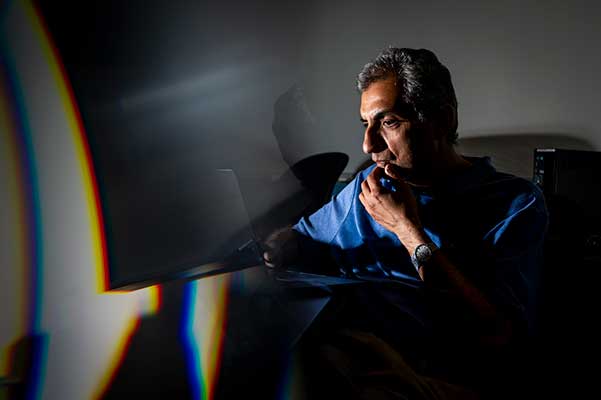
ECE Professor Hossein Mosallaei received the U.S. Department of Energy’s AI Genesis Award to advance research on brain-inspired computer chips that could make future AI supercomputers significantly faster and much more energy-efficient.
This article originally appeared on Northeastern Global News. It was published by Katya Poltorak. Main photo: Hossein Mosallaei studies metamaterials, which can be designed atom by atom to give rise to substances with entirely new properties. Photo by Matthew Modoono/Northeastern University
This researcher is using AI to help computers catch up with the brain
Northeastern professor Hossein Mosallaei received the DoE Genesis Award for his brain-inspired computing research. His team is using AI to develop circuits that process information and remember it at the same time.
For decades, scientists held up the brain as the ultimate supercomputer. No device could come close to the squishy 3-pound bundle of folds and grooves. It was the information processing machine to beat — a model of what computers of the future could be.
According to Northeastern University professor of electrical and computer engineering Hossein Mosallaei, computers are finally closing the gap.
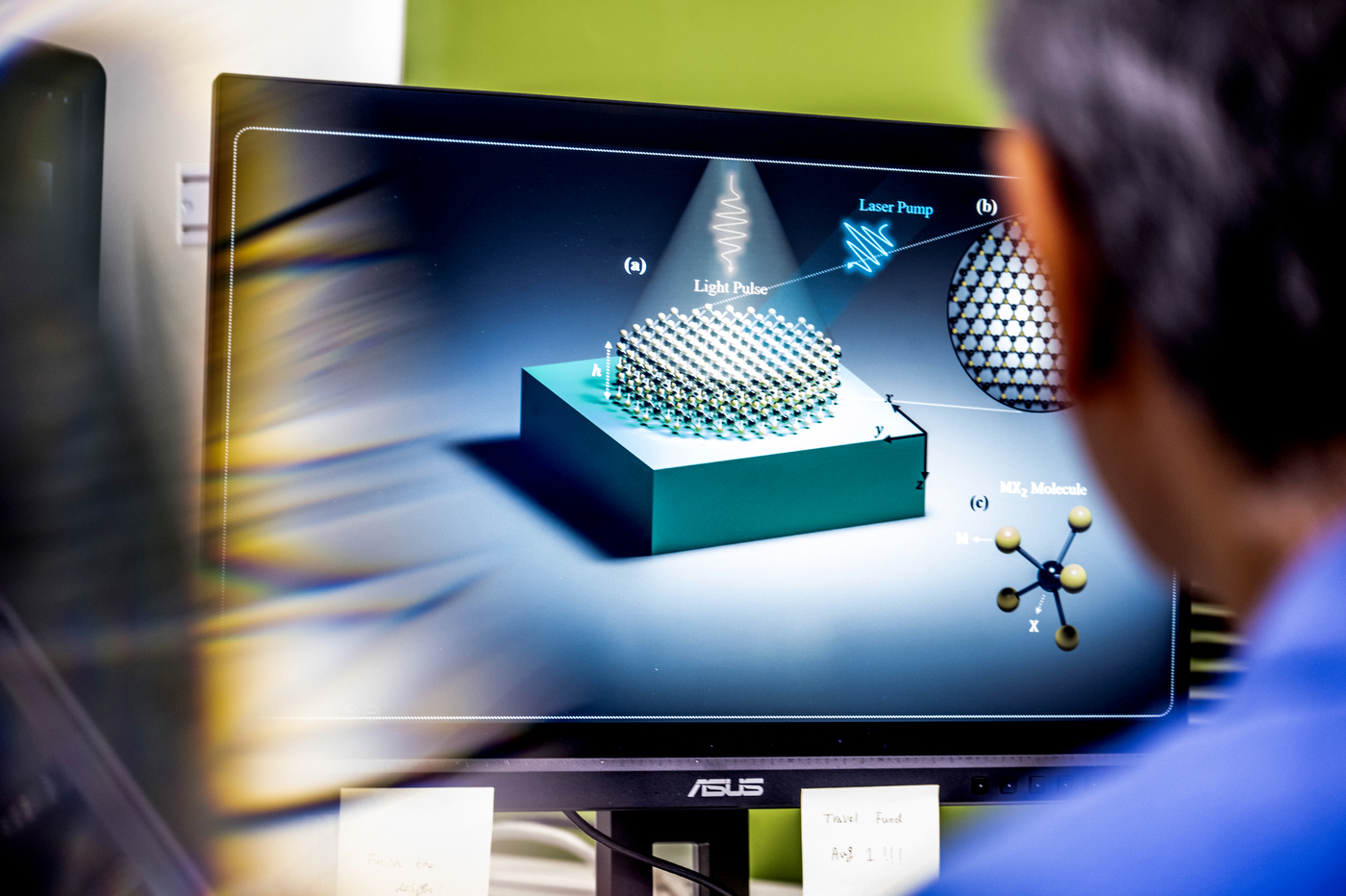
Earlier this month, Mosallaei and his team received a U.S. Department of Energy grant, the AI Genesis Award in the area of microelectronics for a project titled “Self-Driving Discovery and Co-Design of MXene Memristors for 3D Compute-in-Memory Systems.” The grant will be used to continue research on computing devices known as MXene memristors. These tiny computer components built from ultra-thin metamaterials called MXenes (pronounced “Maxines”) can process information and remember it at the same time.
The problem Mosallaei and his team took on is as old as computing itself. It’s the Achilles’ heel slowing down just about every device ever built: the divide between processing and memory.
Computers are made from two basic parts. The central processing unit (CPU) performs calculations and carries out instructions. The random access memory (RAM), in turn, temporarily stores data that the CPU might need and keeps it on hand.
Both store data on circuits, and the electricity that flows through them represents information. The problem is that when processing and memory storage happen in two different places, it makes for one lengthy digital commute that uses up tons of energy.
 |
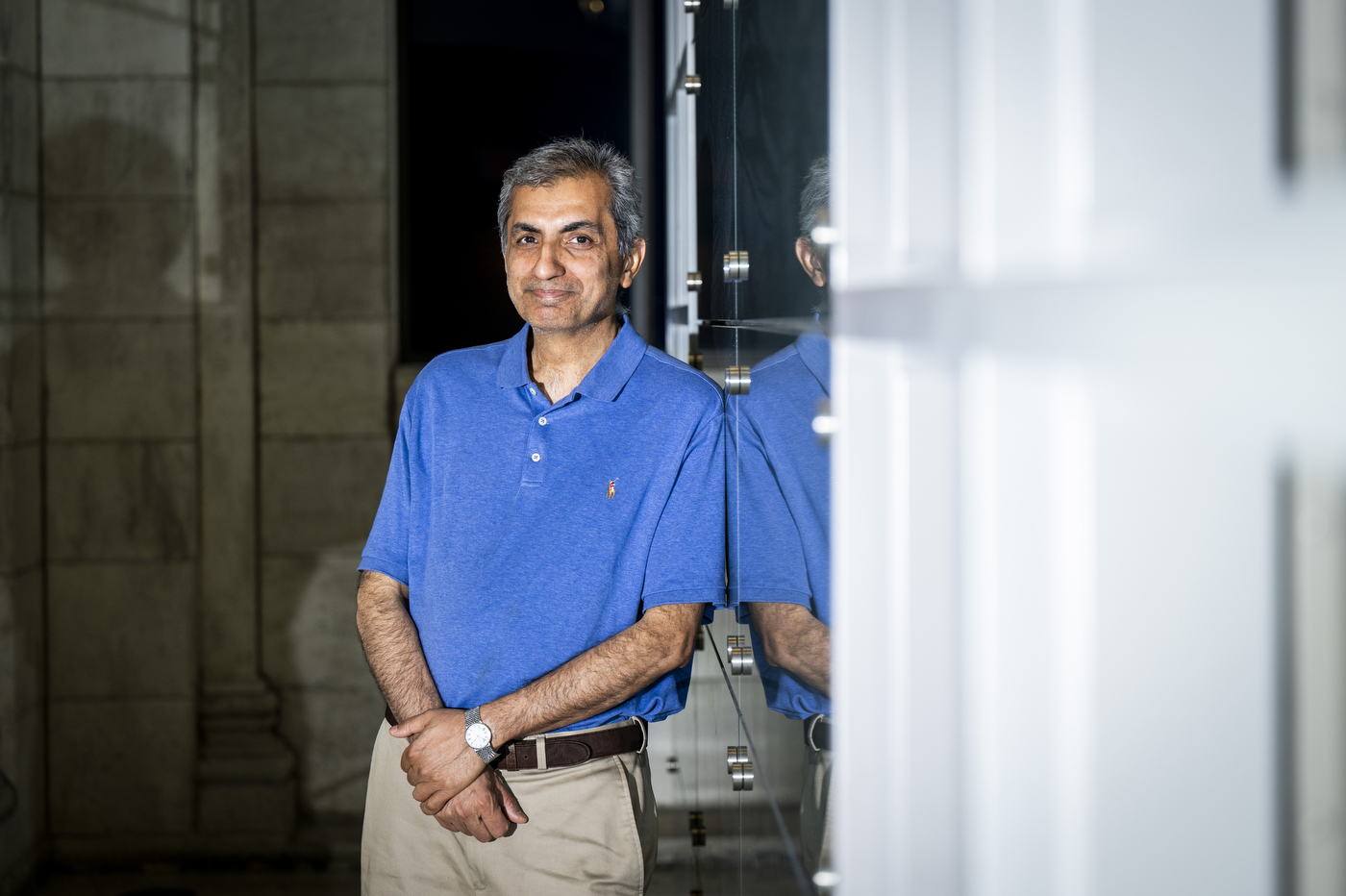 |
Just a few atoms thick, MXenes (left) can be engineered with remarkable precision. Northeastern University professor Hossein Mosallaei (right) is using AI to design brain-inspired MXene memristors to power a new generation of faster, more energy-efficient computers. Photos by Matthew Modoono/Northeastern University
The brain, on the other hand, uses the same physical machinery to process information and remember it. Billions of nerve cells, known as neurons, group into networks that communicate with each other via electrical and chemical signals. The repeated activation of these networks allows for thinking, learning, recognizing patterns and making decisions. It also creates a physical imprint that gets stronger with each round. The deepening impression represents a memory of the activity — kind of like a path in the woods that becomes more prominent each time you walk along it.
For example, seeing a person’s face for the first time activates a set of networks associated with vision and face recognition. As you see the same features over and over again, those pathways get reinforced — they now encode a memory of your friend’s face and make it easier to recognize them.
Read full story at Northeastern Global News