Designing a More Affordable, Sustainable Marimba
Amartya Bhattacharya, E, computer science and computer engineering, tested the physical and acoustic properties of 17 different materials, finding that hickory and cherry wood show the most promise as sustainable, affordable alternatives to endangered rosewood for constructing marimba practice bars.
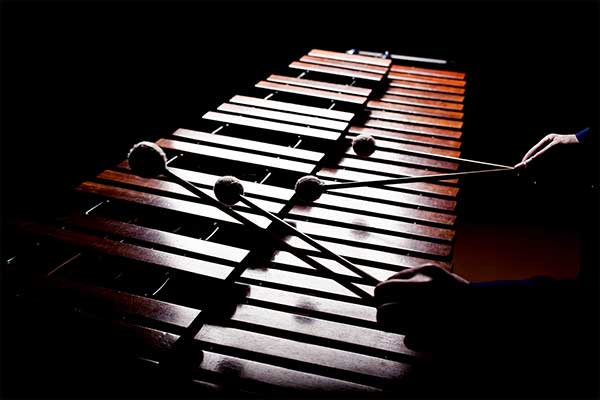
This article originally appeared on Northeastern Global News. It was published by Hannah Morse. Main photo: The marimba is typically made with rare Honduras rosewood. That can make the instrument expensive and out of reach. Getty Images
This Northeastern student and percussionist wants to make the marimba more accessible. Here’s how
From oak to bamboo plywood to plastic used in 3D printing, a Northeastern student studied the properties of 17 materials to see if they could come close to the Honduras rosewood preferred in marimbas.
When Amartya Bhattacharya was in high school in Minnesota, he found himself in an unusual situation.
While his fellow classmates who played many of the band instruments were able to practice at home, he, as a marimba player, was competing for practice time in the band room. He and the other percussionists only had the one five-octave Yamaha professional marimba at school to practice on.
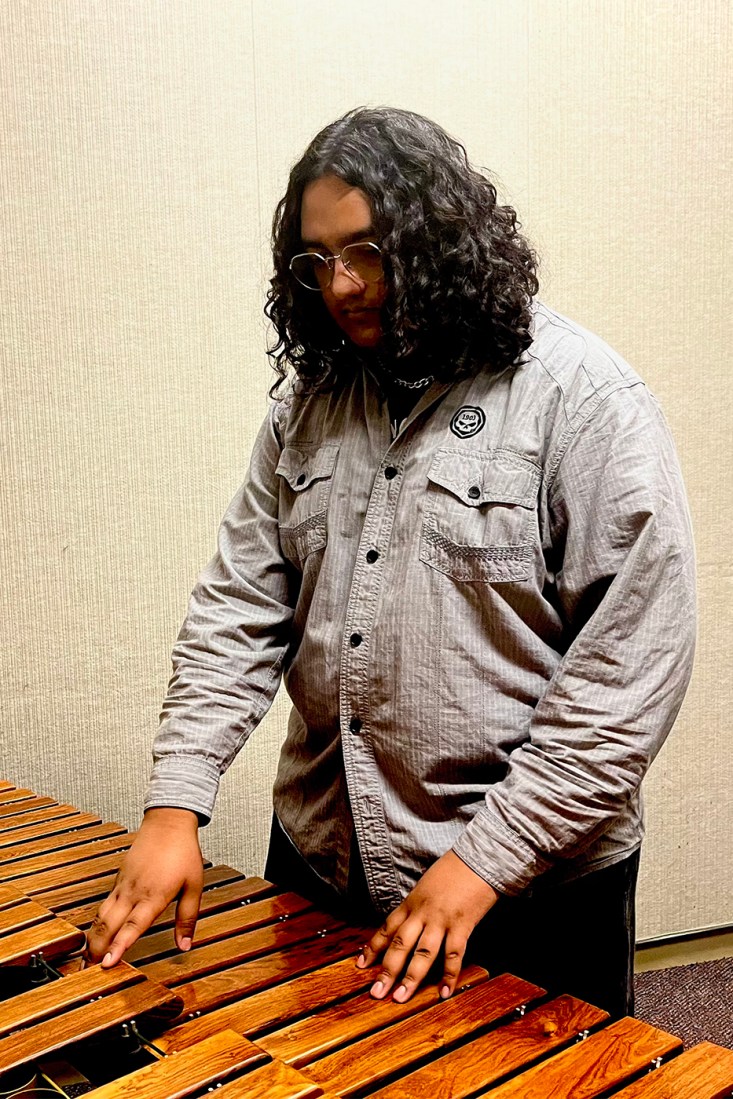
This was especially apparent during the Covid-19 pandemic, when Bhattacharya couldn’t enter the band room and had to rely on similar but altogether different instruments, like the glockenspiel, to practice.
It made Bhattacharya, now a computer science and computer engineering student at Northeastern University, wonder about ways to more easily access a marimba.
“I realized that a lot of our peers in wind instruments and such, like clarinet, trumpet, flute, et cetera, could just bring their instrument home and practice,” he told Northeastern Global News. “And as percussionists, almost none of us have marimbas at home and so it limits our ability to grow unless we stay at school (to practice).”
Beyond its size, the percussion instrument, played with a yarn-wrapped mallet, owes its rounded, earthy sound to the distinctive Honduras rosewood that’s typically used to make its xylophone-like sound bars. It is a slow-growing wood found in Belize, Guatemala and Mexico and can cost up to $53 per board foot. But because the rosewood is also at risk of deforestation and trafficking, the amount of wood needed to put together the instrument means one marimba can cost tens of thousands of dollars.
“Having access to a less expensive instrument, I think that’s something a lot of students and a lot of percussionists would share in that desire,” said Andrew Morrison, coordinating editor of musical acoustics for the Journal of the Acoustical Society of America, which publishes research on the wide-ranging subject of sound.
Listen to the difference among some materials that Amartya Bhattacharya tested. Audio by Amartya Bhattacharya and MalletShop/YouTube
Bhattacharya started working on this problem while in high school. A class required him to partner with a mentor and conduct a research project and instead of exploring a topic related to computer science, he sought this issue that directly affected him.
He studied the properties of 17 hardwoods, softwoods, plywoods and plastics and found two – hickory and cherry – that have promise to be further explored as potential practice instrument substitutes to hopefully help a wider range of percussionists work on techniques like resonance, rolling and bar response. Hickory and cherry cost $8 and $6.20 per board foot, respectively.
Read full story at Northeastern Global News