New AI Design Framework Uses Light to Pack More Data Into Ultrathin Materials
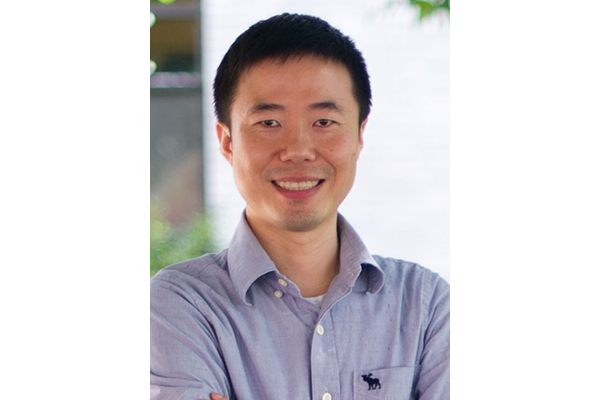
MIE/ECE Professor Yongmin Liu was awarded a $448K NSF grant for “Pushing the Multiplexing Limit in Metasurfaces via Physics-Informed and Data-Driven Approaches.”
Abstract Source: NSF
Non-technical Description:
Photonics plays a crucial role in a wide range of practical applications, from optical displays and communications to virtual reality headsets. Optical metasurfaces, which are artificially patterned surfaces composed of a planar array of nanostructures, have emerged as a new frontier in photonics, enabling precise, on-demand control over light. They offer unique advantages in miniaturization, integration, and functional versatility for photonic devices and systems. However, current metasurfaces typically manipulate only one property of light at a time, which significantly limits how much information a single device can process or control. This project develops a new design framework, combining physics-based theory with artificial intelligence, to simultaneously harness multiple properties of light and dramatically increase the amount of information that a single ultrathin metasurface can encode, transmit, or detect. The project also invests in the next generation of scientists and engineers. Graduate and undergraduate students participating in the project will receive rigorous research training, and master diverse skills in photonics, artificial intelligence, and advanced fabrication and optical characterization. Together, the project advances both fundamental scientific knowledge and the technical workforce needed to translate discoveries into real-world applications.
Technical Description:
Current metasurface designs typically exploit individual degrees of freedom (DOFs) of light — amplitude, wavelength, phase, polarization, orbital angular momentum, and incidence/viewing angle — largely in isolation. Because the number of accessible information channels scales as the product of the states available across DOFs, achieving substantially higher multiplexing capacity requires a unified framework capable of co-designing multiple DOFs within a single metasurface platform. The overarching goal of this project is to establish new physics-informed and intelligent design paradigms that transcend existing multiplexing limits. The project consists of three research thrusts, including (1) developing physics-informed analytical and computational models that quantify the fundamental and practical multiplexing limits in metasurfaces; (2) integrating the physical models with data-driven methods to efficiently navigate the high-dimensional design space and identify multiplexed metasurfaces operating near the theoretical bounds; and (3) performing closed-loop experimental validation through fabrication and characterization of distinct multiplexed metasurfaces. The project leverages both physical insights and artificial intelligence, unifying interpretability with computational power. Such a synergy will unlock design spaces that are currently inaccessible, and enable sophisticated metasurfaces that would be impractical, or even fundamentally impossible, to realize using conventional approaches. Ultimately, the success of the project will push the frontiers of photonics, nanotechnology, and computational design, laying the foundation for a new generation of intelligent photonic devices and systems with unparalleled functionality, capacity, efficiency, and societal impact.