Powering the Next Generation of Light Sources
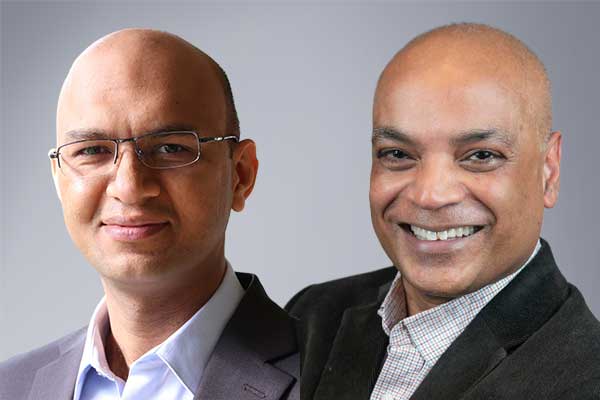
ECE Assistant Professor Sunil Mittal and Professor Srinivas Tadigadapa were awarded a $550K NSF grant for “On-Chip Functionalized Glass Bubble Resonators for Generating Classical and Quantum Light.”
Abstract Source: NSF
Classical and quantum light sources, most notably optical frequency combs and entangled photon-pair emitters, enable transformative technologies, including classical and quantum optical communications, biochemical sensing, spectroscopy, and precision time and frequency measurements. Recent advances in integrated photonics have elucidated scalable, compact routes to realizing such light sources. Nevertheless, their efficient generation and the continued expansion of their applications are still hindered by the limited availability of fabrication-friendly materials with high optical nonlinearities and by the complexity of heterogeneous integration. This project will develop on-chip hollow glass bubble resonators, functionalized with highly nonlinear materials, as a new, reconfigurable platform for generating efficient classical and quantum optical frequency combs. This platform could enable a broad range of technologies, including high-precision timing for global positioning systems and network synchronization, high-resolution spectroscopy for detecting molecules and gases at low concentrations, efficient generation of quantum states of light for quantum communications, and quantum sensing. The project integrates research with photonics-focused STEM education, outreach, and experiential workforce development activities for K-12 and undergraduate students.
On-chip integrated photonic resonators with Kerr nonlinearity have enabled a compact, scalable route for generating classical and quantum optical frequency combs. Nevertheless, most on-chip sources rely on resonant enhancement in conjunction with epitaxially grown nonlinear media, such that the same material simultaneously forms the resonator and provides the nonlinear light–matter interaction. This paradigm fundamentally constrains the range of optical functionalities that can be realized within a single material platform. This project introduces a new paradigm by decoupling optical confinement from material functionality through the use of high-quality glass bubble resonators as universal hosts that can be selectively functionalized with materials exhibiting very high optical nonlinearities. By functionalizing the bubbles with various liquid-phase materials, such as III–V semiconductor quantum dots, perovskite quantum dots, and liquid crystals, which exhibit optical nonlinearities that are orders of magnitude larger than those of conventional photonic materials, the project will develop high-efficiency, reconfigurable classical and quantum combs with low pump-power requirements. By doping the glass with rare-earth ions and filling the bubbles with dye solutions, the project will integrate lasers on a single chip. Beyond light generation, the compatibility of bubble-resonator frequency combs with microfluidics will open new directions in broadband spectroscopy and quantum-enhanced sensing and imaging of biochemical systems. The project will broaden participation in STEM through field trips that include hands-on demonstrations for K-12 students. It will also engage undergraduate students in photonics research, provide them with experiential learning opportunities, encourage them to pursue careers in photonics and quantum engineering, and help build a skilled future workforce.