Translating Data Rigor into Business Relevance
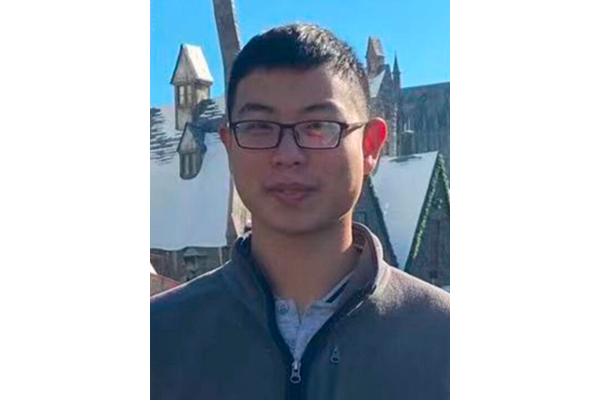
Tianyu Yang, PhD, industrial engineering, used Northeastern’s LEADERs program and an industry fellowship at AmeriLife to connect his academic data research with real-world business challenges, focusing on how to translate complex analytics into clear, actionable advice for decision-makers.
Industrial Engineering PhD Candidate Tianyu Yang on Communication, Causal Inference, and a Case for Stepping Outside the Lab
Going from Methods to LEADERs
Tianyu Yang, a PhD candidate in Industrial Engineering whose research centers on causal inference, machine learning, and optimization methods for decision-making using observational data, is the kind of researcher whose work has real stakes beyond a dissertation. The methods he develops have the potential to inform decisions in healthcare, policy, business, and beyond to anywhere that large datasets substitute for controlled experiments and where getting the inference wrong has consequences. However, technical rigor, he learned, is only half the solution. That realization is part of what brought Yang to Northeastern’s LEADERs program, as well as part of what he carried out of it.
When Yang decided to pursue the LEADERs program, he was clear-eyed about his motivation. He wasn’t looking for another credential. He was looking for something harder to quantify, “I joined the LEADERs program because I wanted to improve not only my technical abilities, but also my communication and leadership skills. As a PhD student, I realized that being able to clearly explain ideas, deliver presentations, and communicate with different audiences is just as important as conducting research itself.”
This insight that the work isn’t finished until someone else can understand it, is one that takes many researchers years to arrive at, but Yang recognized it early. He also recognized something else: that confidence, the kind that comes from real-world engagement rather than seminar performance, was something he wanted to actively build, “I also hoped the program would help me build more confidence through real-world experiences and collaboration with professionals outside academia,” which the LEADERs program, with its combination of coursework and industry placement, offered exactly.
Skills that Encompass Both Worlds
Yang’s LEADERs placement was at AmeriLife, a national leader in the development, marketing, distribution and administration of life and health insurance, annuities, and retirement planning solutions. His placement taught him something that is difficult to teach in a classroom setting: producing a correct analysis is not always producing a useful one. In research settings, the audience is usually other researchers, and so the gold standard is methodological soundness, reproducibility, and novelty.
At AmeriLife, the audience was different. It included stakeholders, business teams, and decision-makers whose primary concern is not elegance but action: What does this mean? And what do we do with it? “The most valuable lesson I learned was that technical solutions alone are not enough. It is very important to understand the perspectives of different audiences, including stakeholders, business teams, and technical teams. I learned how to present analytical results in a way that is meaningful and actionable for decision-makers rather than focusing only on technical details.”
That lesson on how to translate rigor into relevance is one that Yang has brought back directly into his approach to research. He now thinks not only about whether his methods are valid, but whether they are usable – interpretable, clearly communicated, and connected to problems that matter to people outside his own field. Beyond the conceptual shift, Yang points to something more practical he gained from his LEADERs placement at AmeriLife: honest feedback, “One thing I really appreciated was the clear and constructive feedback I received from my supervisor and colleagues. The experience helped me better understand my strengths as well as the areas where I still need improvement, especially in communication, presentation, and professional collaboration.”
It also gave him exposure to something that doctoral programs don’t always provide in abundance: genuine teamwork. Real-world problem solving often operates differently from academic collaboration – deadlines can be harder, stakeholders can be more demanding, and the stakes of a missed communication more immediate. Far from being a weaknesses of industry, these are features of it, and learning to function effectively inside them is its own kind of education. The LEADERs program broadened Yang’s vision of what his career could look like, because he came in thinking about his future in largely technical terms but left with an understanding of how technical expertise connects to strategic and organizational goals, as well as how someone with his background can sit at the intersection of methods and impact.
Advice for the Next Cohort
When asked what he would tell a PhD student considering the LEADERs program, Yang doesn’t hesitate to encourage embracing the mindset shift, “I would encourage PhD students to step outside the traditional researcher mindset and fully engage with the interdisciplinary and collaborative nature of the program. The experience can help students gain a clearer understanding of both their research and themselves by seeing how their skills and ideas can create value in real-world settings.” The phrase that stands out is “a clearer understanding of both their research and themselves” – it’s a pairing that many research programs struggle to frame together, as if one’s research work is separate from one’s capacities as a professional. Yang found through his experience that they aren’t, and the LEADERs program was the place where these two disparate yet intertwined parts of him came together.
Source: PhD Education